The ocean floor is just like the dry land only covered with water. There are valleys, mountains, plains and deep trenches.
The deepest point known in the ocean is called the Challenger Deep and is located in the Marianas Trench in the South Pacifistic Ocean near Guam. (Which is over by China, Australia and Japan. It's a small island.)
The Challenger is 10,911 meters below the surface of the ocean floor. -Not the top of the water. (That's about 35,797.244 feet and that would equal almost 7 miles.)
If you put mount Everest in the Challengver, Everest would be covered by 2 kiolmeters of water. (That's over a mile of water.)
Well, that's about 11 kelometers of water all pressing down at about 1145 tons per square foot.
The first exploration of the Challenger was in January of 1960 by the crew of a sub called the Trieste. They went way down, down to the bottom of the ocean floor. It was pitch black and cold. But in the head lights of the Trieste they saw something go past. Looking closer it turned out to be a flat fish about a foot long. It just proves that GOD made every bit of the earth to be inhabited by living creatures, not excluding the deepest, coldest point in the ocean.
Showing posts with label cold. Show all posts
Showing posts with label cold. Show all posts
Thursday, June 7, 2012

Monday, April 23, 2012
Icebergs
First off, we need to get the difference between icebergs and ice-chunks.
Ice-chunks are frozen water.
Icebergs are frozen snow that builds up after a long time with out melting.
After a while gravity causes the frozen snow to slowly flow down the side of the iceberg at a grand speed of a few inches a day.
When the snow finally gets down into the water, it forms an ice-shelf. This ice-shelf is spread-out under the surface of the water. The biggest ice shelf was the size of Texas. This one was called the Ross ice-shelf.
Some icebergs are really big and a few where actually mistaken for islands. Well, the part of icebergs that we see is only about 10% of the actually iceberg and the other 90% is the part that we have to worry about. Sometimes the bottom of an iceberg can reach 800 meters or 2,620 feet. (This is down in the thermocline leval.)
Ice-chunks are frozen water.
Icebergs are frozen snow that builds up after a long time with out melting.
After a while gravity causes the frozen snow to slowly flow down the side of the iceberg at a grand speed of a few inches a day.
When the snow finally gets down into the water, it forms an ice-shelf. This ice-shelf is spread-out under the surface of the water. The biggest ice shelf was the size of Texas. This one was called the Ross ice-shelf.
Some icebergs are really big and a few where actually mistaken for islands. Well, the part of icebergs that we see is only about 10% of the actually iceberg and the other 90% is the part that we have to worry about. Sometimes the bottom of an iceberg can reach 800 meters or 2,620 feet. (This is down in the thermocline leval.)
Tuesday, March 1, 2011
The Snowy Owl
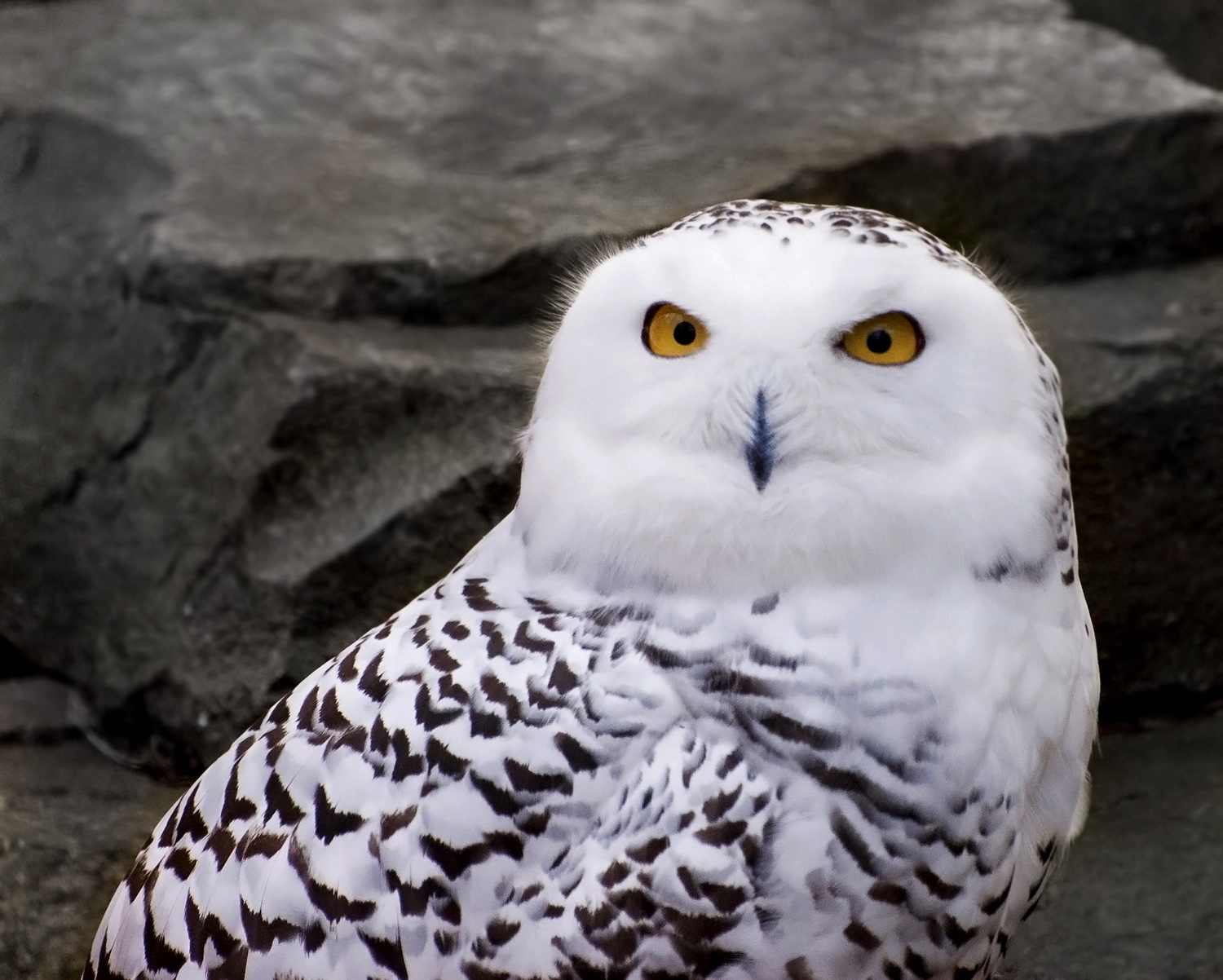 Sorry I haven't done a bird post in so long!
The Snowy Owl seems to like places like fields or other open places. It never roosts in trees, only on the ground or on rooftops.
 It lives in Alaska and Canada and goes a little ways "down south" for the winter during which (or so I've read) they like to stay at airports. (Don't ask me about that. I am not the one who decides things like that.)
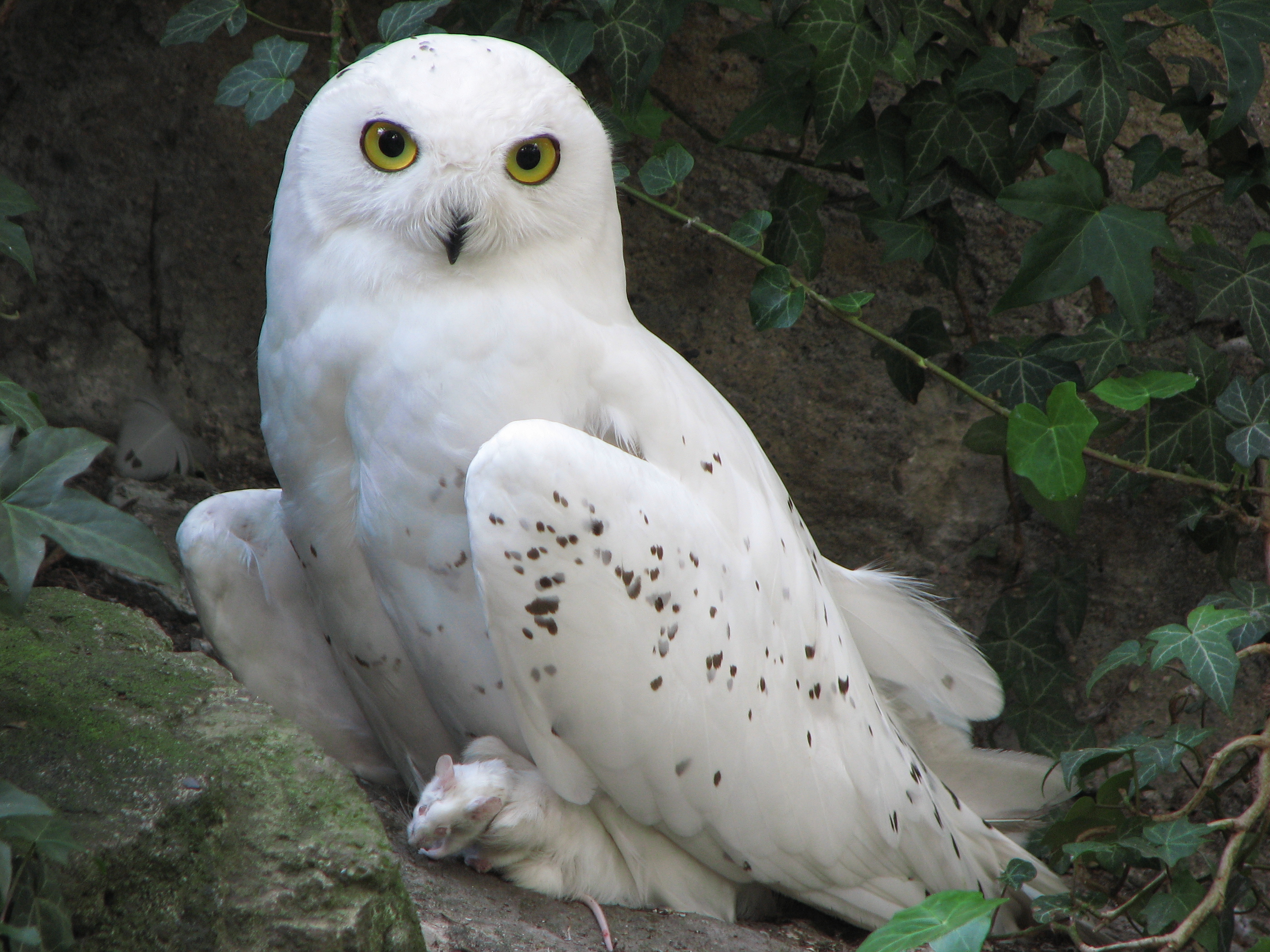 I'm not real sure how big they are, only that they are big and are white with dark spots.
The females usually have more markings then the males.
 (Great markings display!)
The Snowy Owls lay about 5-8 white eggs.
Thursday, January 27, 2011
Emperor Penguin

The Emperor Penguin stands three feet tall and weighs 100 pounds.
They feed at sea on squid and fish, and their most deadly enemy is the leopard seal.
The Emperor Penguin is most known for its march. In the autumn the penguins gather in thousands for their march.
After the female lays her egg, she leaves and goes back to the sea to feed. She leaves the male in charge of the egg. She will return when the egg hatches.
The parents will then take care of the chick together. When it is about 5 to 6 months old all the Emperor Penguins gather and they begin their march once more.
Thursday, November 11, 2010
Pluto!!!

Pluto is the last planet in our solar system and it is rather confusing so just try to stay with me.
Pluto is the smallest planet and it's number 9. But that's only part true. Every 248 years Pluto and Neptune change places Pluto becomes number 8. The last time Pluto became the 9th planet that was in 1999.
Pluto swaps with Neptune for about 20 years then goes back.
Scientists haven't been able to study Pluto very well because of it being so far away but they think it's about 390 degrees below zero over there. Pluto rotates in the opposite direction of most of the other planets and is like Uranus is on it's side.
All the planets orbit around the sun in all at more or less the same height but Pluto orbits up and down.
Pluto was discovered 1930 and 48 years later Pluto's moon Caron was discovered.
Earth's moon is equal to about a 50th of Earth's size but Caron is about a 6th of the size of Pluto.
Most People think that Pluto should be a comet because of it's size and behavior. But some think it should be a planet.
In 2006 NASA sent out a spacecraft that is supposed to reach Pluto in 2015.
Pluto also has something called the Kuiper belt which will probably need it's own post.
Thursday, October 14, 2010
A little on Mars

The planet next in line is the planet Mars.
Mars is a lot like earth in that it has volcanoes, mountains and valleys.
But Mars is different from the earth because it has a thin layer of atmosphere and no oxygen.
Mars has two moons Phobos and Deimos. (Neither look much like moons.)
It takes two earth years for Mars to orbit the sun and and day on Mars is equal to 687 earth days.
Mars is always 81 degrees below zero. And the hottest it gets is 32 so my sister, Erin,(who doesn't like the cold)is glad we do not live there.
All though Mars is so cold it is closer to earth temperatures then any other planet.
Just like the earth Mars is at a tilt and so it has four different seasons:
Very Cold; A Little Warmer(32 degrees); Getting Colder and Very Cold Again. Just kidding!
But it does have four seasons.
Mars is a lot like earth in that it has volcanoes, mountains and valleys.
But Mars is different from the earth because it has a thin layer of atmosphere and no oxygen.
Mars has two moons Phobos and Deimos. (Neither look much like moons.)
It takes two earth years for Mars to orbit the sun and and day on Mars is equal to 687 earth days.
Mars is always 81 degrees below zero. And the hottest it gets is 32 so my sister, Erin,(who doesn't like the cold)is glad we do not live there.
All though Mars is so cold it is closer to earth temperatures then any other planet.
Just like the earth Mars is at a tilt and so it has four different seasons:
Very Cold; A Little Warmer(32 degrees); Getting Colder and Very Cold Again. Just kidding!
But it does have four seasons.
Subscribe to:
Posts (Atom)